Current Challenges: Human-AI Collaborative Workflows
Designers, builders, and civic technologists are facing a core problem: how to develop civic tech responsibly in the age of AI without creating redundant, unmaintainable, or harmful solutions.
Is it possible to create meaningful work using LLM models? When a new wave of vibecoders (builders with no programming skills) are shipping websites in less than a day, there's a clear gap in accountability that needs to be addressed.
This creates several cascading challenges:
- Lack of frameworks for responsible AI-enabled design - there's no clear, accessible methodology that allows practitioners to balance speed with responsibility while building civic tech. Read more: Impact Assessment
- Lack of transparency and unaccountability - current AI development practices often lack transparency about tradeoffs, making it difficult for communities to understand how AI systems will impact them or to offer meaningful critique. Read more: Transparency Reporting
- Scale mismatch - large language models (LLMs) are presented as the default solution, but they may be overkill for many applications and come with disproportionate environmental and resource costs. Read more: Model Right-Sizing
- Weakened community agency - without continuous accountability mechanisms and openness to critique, affected communities lose the ability to shape and govern the AI systems being built for them. Read more: Community Governance
- No clear alternative path - practitioners who want to build differently lack both a practical toolkit and evidence that smaller, more efficient AI models can deliver meaningful civic tech solutions. Read more: Open-Source Tooling
Who Is This For?
The Smol Gardens Project is a guide created for technologists, designers, researchers or educators who are already using AI tools in their workflow.
You can use the Seedscore Impact Assessment Tool as a framework or guide for your workflow, Smol gardens aims to educate and push for alternatives to using LLM models, with an end goal to incorporate Accountable tech principles in a builder's workflow.
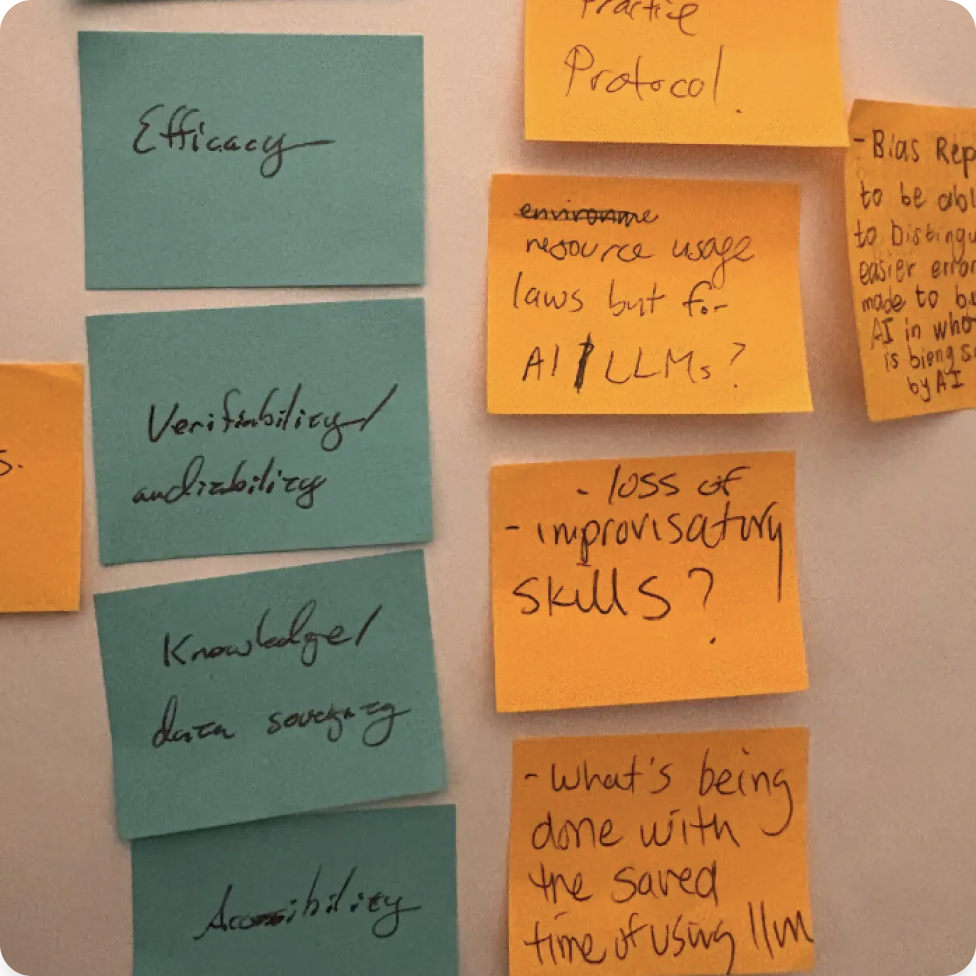
In the workshops, participants will be invited to document and audit their work using an impact assessment framework.
Our Approach
Design Workshops
Invite participants to document actual AI usage through a "diary mission," using the Impact assessment tool as guide.
Read more: Transparency ReportingImpact Framework
Create the impact assessment tracking tool. We're developing a framework that measures human, systems, and environmental impact on AI-enabled web-development.
Read more: Impact AssessmentSmall Language Models
Use small language models (SLMs) to build a curated repository of civic tech tools hosted by the Accountable Tech working group and will be made available open source for future builders.
Read more: Open-Source Tooling